
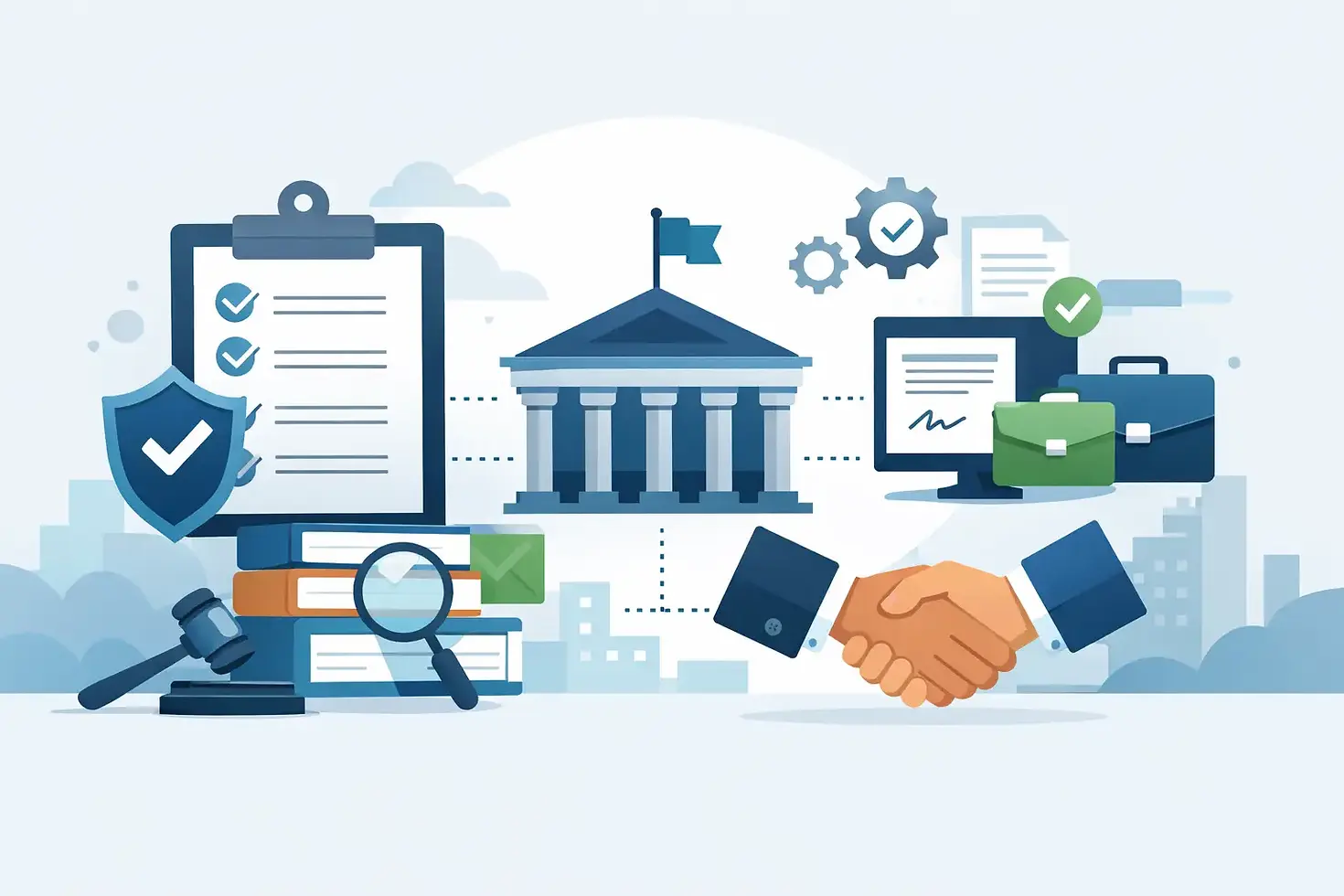
Tier 1 Tender Compliance Systems Explained

A tender gets lost long before pricing is compared if your compliance position looks thin. For many Australian businesses, tier 1 tender compliance systems are the difference between making the shortlist and being ruled out at prequalification. Large principals are not just buying capability. They are buying evidence that your business can control safety, quality, environmental risk and contractor performance under scrutiny.
That is why the conversation cannot stop at having a few policies in place or a shared drive full of forms. Tier 1 buyers expect systems that are current, implemented and supported by records. They want to see that your business can manage risk on site, respond to incidents, control subcontractors and maintain legal and contractual compliance across live operations.
What tier 1 tender compliance systems actually mean
In practical terms, tier 1 tender compliance systems are the management frameworks, controls and records that show your business is fit to deliver work for major clients, government bodies and large contractors. They usually sit across WHS, quality, environment and governance, and they must hold up in both procurement review and operational reality.
For many businesses, this means aligning their systems with ISO 9001, ISO 45001 and ISO 14001, then making sure those systems are not just written for certification. A principal contractor or procurement team will often test whether documented processes are actually used, whether responsibilities are clear, whether incidents and corrective actions are tracked, and whether leadership can demonstrate oversight.
This is where many otherwise capable businesses fall short. They may be technically competent, well resourced and commercially competitive, but their systems do not present as controlled, mature or consistent. In a tier 1 environment, that gap matters.
Why major clients look so closely at compliance systems
Tier 1 procurement is risk transfer by another name. When a major client engages a supplier, they also take on exposure linked to safety incidents, environmental harm, quality failures, industrial disruption, security issues and supply chain non-conformance. Their procurement processes are designed to reduce that exposure before work begins.
A strong compliance system gives them confidence that your business can manage foreseeable risks without constant intervention. It also tells them something about leadership discipline. If your policies, registers, audits, training records and contractor controls are all current and coherent, it suggests your business is run with structure. If they are fragmented or outdated, procurement teams will reasonably assume other controls may be weak as well.
There is also a legal and governance angle. Directors and senior leaders in larger organisations are under pressure to show due diligence in contractor selection. Selecting suppliers with poor system maturity can create avoidable risk. That is one reason tender questionnaires are now more detailed, with heavier expectations around evidence and system verification.
The core elements of a credible tier 1 tender compliance system
The exact requirements depend on the sector, the client and the contract risk profile. A manufacturing supplier bidding into a major infrastructure project will not face exactly the same compliance questions as a security provider or transport contractor. Still, there are common foundations.
A credible system usually includes a clearly structured management framework, current policies endorsed by leadership, legal registers, risk assessment methodology, incident reporting and investigation processes, internal audit activity, corrective action controls, competency and training records, and document control. If subcontractors or suppliers are part of the delivery model, there also needs to be an organised contractor management process that covers prequalification, induction, monitoring and review.
For higher-risk businesses, procurement teams often expect to see evidence that critical controls have been identified and verified, not just general statements about commitment to safety or quality. They may also examine how environmental obligations are managed, particularly where waste, emissions, dangerous goods or land and water impacts are relevant.
Certification can help, but it is not a substitute for substance. An ISO certificate may get attention, but procurement reviewers still want to understand how the system works in practice. If the business cannot explain its processes clearly, or if the records do not support the claims, certification alone will not carry the submission.
Where businesses usually fall short
The most common problem is building systems for appearances rather than operations. Businesses know they need policies, SWMS, registers and audit schedules, so they assemble the documents. But if those documents are generic, poorly integrated or disconnected from actual site activity, the weaknesses show quickly.
Another issue is inconsistency. A company may have a strong WHS framework but little environmental structure. It may hold ISO 9001 certification but lack formal contractor controls. Or it may have excellent procedures on paper but no reliable records of inductions, toolbox talks, inspections or corrective action close-out. Tender reviews often expose these gaps because they force the business to produce evidence in a disciplined format.
There is also a maturity problem in growing businesses. As a company expands, informal controls that once worked become unreliable. Knowledge sits with a few key people. Documents are stored in too many places. Actions are tracked by memory rather than system. This is often the point where directors realise that better compliance is not administrative overhead. It is operational infrastructure.
Building systems that work in tenders and on site
The best approach is to start with a realistic gap analysis against the type of work and clients you want to win. Not every business needs the same level of system complexity, and overbuilding a system can create just as many problems as underbuilding one. If the system is too cumbersome, people stop using it. If it is too light, it fails procurement review or breaks down under contract pressure.
A practical build usually begins with governance and risk. Who is responsible for what? What legal duties apply? What are the material safety, quality and environmental risks? From there, procedures, registers and forms should be designed to support actual workflows rather than theoretical compliance.
For example, contractor management should reflect how subcontractors are really engaged, inducted and monitored. Incident management should be simple enough that site teams use it promptly, but detailed enough to support investigation and corrective action. Internal audits should test control effectiveness, not just confirm that a document exists.
This is also where process mapping matters. When businesses map how work is actually done, they can remove duplication, tighten accountabilities and produce cleaner tender evidence. Procurement teams respond well to systems that are easy to follow because they suggest easier implementation at contract level too.
The role of ISO alignment in tier 1 tender compliance systems
ISO alignment is often the most efficient way to bring order to a business that needs stronger tender readiness. Standards such as ISO 9001, ISO 45001 and ISO 14001 provide structure around leadership, planning, operational control, monitoring, improvement and documented information.
That said, ISO should be treated as a framework, not a script. A business chasing certification without addressing its real operational risks may end up with a compliant-looking system that staff resent and ignore. A better result comes when the management system is designed around the business first, then aligned to the standards in a disciplined way.
For procurement-facing leaders, the commercial value is straightforward. ISO-aligned systems improve consistency, support evidence generation, reduce non-conformances and make tender responses more credible. They can also strengthen director confidence because oversight becomes more visible and defensible.
Why external support often speeds up the process
Internal teams are usually balancing compliance work with day-to-day delivery, which means system improvement gets pushed behind urgent operational demands. External support can accelerate progress by identifying gaps quickly, drafting fit-for-purpose documents, facilitating risk reviews, conducting internal audits and preparing the business for both certification and tender scrutiny.
The key is choosing support that understands the Australian legal context and the commercial pressure behind tendering. Generic templates rarely survive contact with real procurement review. A consultancy that knows WHS obligations, high-risk operations and ISO implementation can build a system that works under audit, on site and in front of a principal.
That is the difference between paperwork and a functioning management system. One fills a folder. The other improves your position in the market.
What good looks like when procurement reviews your business
A strong submission does not try to impress with volume. It presents a controlled, coherent picture of how the business operates. Policies are current. Registers are maintained. Risks are assessed using a repeatable method. Training, inspections, audits and corrective actions are evidenced. Contractor controls are clear. Leadership involvement is visible.
Just as importantly, the story is consistent. The tender response, attached records and operational interviews all point in the same direction. That consistency is what gives procurement teams confidence.
If your business is targeting larger contracts, now is the time to treat compliance systems as part of growth strategy rather than a back-office task. The market is rewarding suppliers who can prove control, not just claim capability. Build the system properly, and tenders become easier to pursue with confidence.



Comments